
You've broken down on a two-way road. You have a warning triangle. At least how far from your vehicle should you place the warning triangle?
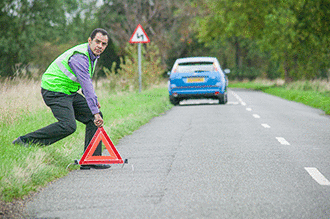
- A 5 metres (16 feet)
- B 25 metres (82 feet)
- C 45 metres (147 feet)
- D 100 metres (328 feet)
Why this is the answer
Advance warning triangles fold flat and do not take up much room. Use one to warn other road users if your vehicle has broken down or if there has been an incident. Place it at least 45 metres (147 feet) behind your vehicle (or the incident), on the same side of the road or verge. Place it further back if the scene is hidden by, for example, a bend, hill or dip in the road. Do not use warning triangles on motorways.
Why the other answers don't fit
- A
- 5 metres (16 feet) — So close that a driver would reach your car before they had reacted to the triangle.
- B
- 25 metres (82 feet) — Still short of the distance the rule gives.
- D
- 100 metres (328 feet) — Further than is asked for. The figure to remember is 45 metres.
Where this comes from
- Driving: the essential skills — section 15
- The Highway Code — rule 276
Rule numbers link to The Highway Code on gov.uk.
Where this question comes from
The question, its options and the explanation are reproduced word for word from the DVSA revision question bank under licence. The licence requires them to appear unaltered, so we cannot reword them and neither can anyone else — that is why you will meet the same wording on other sites. Everything else on this page is written by Theory Hub: the explanation of why each wrong answer is wrong, the topic guide and the revision notes.
Asked in: Car
More questions on Incidents, accidents and emergencies
- A casualty is not breathing normally and needs cardiopulmonary resuscitation (CPR). At what rate should you press down and release on the centre of their chest?
- A collision has just happened. An injured person is lying in a busy road. What’s the first thing you should do?
- After a collision, someone is unconscious in their vehicle. When should you call the emergency services?
- An adult casualty is not breathing. To maintain circulation, cardiopulmonary resuscitation (CPR) should be given. What's the correct depth to press down on their chest?
- An injured motorcyclist is lying unconscious in the road. The traffic has stopped and there's no further danger. What could you do to help?
- An injured person has been placed in the recovery position. They're unconscious but breathing normally. What else should be done?
- At an incident, a casualty is not breathing. What should you do while helping them to start breathing again?
- At an incident, a casualty is unconscious but breathing. When should you move them?