
You're driving a laden articulated lorry with a maximum authorised mass of 38 tonnes on a dual carriageway in England. What speed limit applies to your vehicle after passing this sign?
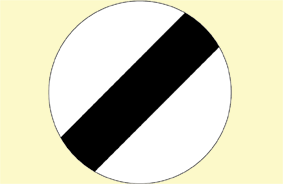
- A 40 mph
- B 50 mph
- C 60 mph
- D 70 mph
Why this is the answer
60 mph may be the legal speed limit for a goods vehicle on a dual carriageway in England and Wales, but it does not mean that it's safe to drive at that speed. You should always take into account the road, weather and traffic conditions, and maintain safety margins.
Why the other answers don't fit
- A
- 40 mph — 40 mph belongs to other vehicle classes.
- B
- 50 mph — 50 mph is the single-carriageway figure for this weight.
- D
- 70 mph — 70 mph is the car limit; a vehicle at this weight is held lower.
Where this comes from
- The Highway Code — page 126
- Know Your Traffic Signs — page 21
Rule numbers link to The Highway Code on gov.uk.
Where this question comes from
The question, its options and the explanation are reproduced word for word from the DVSA revision question bank under licence. The licence requires them to appear unaltered, so we cannot reword them and neither can anyone else — that is why you will meet the same wording on other sites. Everything else on this page is written by Theory Hub: the explanation of why each wrong answer is wrong, the topic guide and the revision notes.
Asked in: Lorry & Bus (LGV/PCV)
More questions on Road and traffic signs
- What's the aim of variable speed limits on a motorway?
- What's the national speed limit on a motorway for a lorry weighing over 7.5 tonnes?
- What's the purpose of an emergency area on a motorway?
- What's the purpose of green-and-yellow fluorescent studs on a motorway?
- When can you travel on the hard shoulder of a motorway?
- When must these 2 signs be used?
- When must you stop on a motorway?
- Where would you expect to see these road markings?