
Why should you slow down when you see this sign?
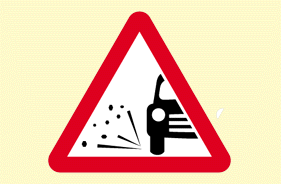
- A To reduce the risk of a blow-out
- B To avoid splashing others with water
- C To avoid throwing up loose chippings
- D To prevent grit from blocking your air filter
Why this is the answer
This sign is usually accompanied by a reduced speed limit. When chippings fly out from your tyres, they can cause a lot of damage to other vehicles, or injury to pedestrians, cyclists and motorcyclists. Slowing down will reduce the risk.
Why the other answers don't fit
- A
- To reduce the risk of a blow-out — A blow-out comes from a damaged or under-inflated tyre, not from the surface alone.
- B
- To avoid splashing others with water — Splashing is a wet-weather problem; loose chippings are dry.
- D
- To prevent grit from blocking your air filter — Your air filter is not what the sign is protecting.
Where this comes from
- Know Your Traffic Signs — page 160
Rule numbers link to The Highway Code on gov.uk.
Where this question comes from
The question, its options and the explanation are reproduced word for word from the DVSA revision question bank under licence. The licence requires them to appear unaltered, so we cannot reword them and neither can anyone else — that is why you will meet the same wording on other sites. Everything else on this page is written by Theory Hub: the explanation of why each wrong answer is wrong, the topic guide and the revision notes.
Asked in: Lorry & Bus (LGV/PCV)
More questions on Road and traffic signs
- A bus-lane sign shows no hours of operation. When is the bus lane in operation?
- At a junction, you see this sign partly covered by snow. What does it mean?
- The double white line along the centre of the road is unbroken on your side. When may you cross the line?
- What are these advanced stop lines for?
- What are traffic officers authorised to do?
- What colour follows the green signal at a puffin crossing?
- What does it mean when there are double red lines running along the edge of a road?
- What does this arm signal mean?