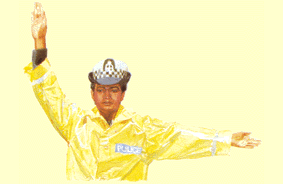
What does this signal from a police officer mean to oncoming traffic?
- A Go ahead
- B Stop
- C Turn left
- D Turn right
Why this is the answer
Police officers may need to direct traffic; for example, at a junction where the traffic lights have broken down. Check your copy of The Highway Code for the signals that they use.
Why the other answers don't fit
- A
- Go ahead — A beckoning signal means go, and it looks quite different.
- C
- Turn left — Direction signals use a sweep of the arm, not a raised hand.
- D
- Turn right — The same again: a turn is directed with a sweep of the arm, not a raised palm.
Where this comes from
- The Highway Code — page 124
Rule numbers link to The Highway Code on gov.uk.
Where this question comes from
The question, its options and the explanation are reproduced word for word from the DVSA revision question bank under licence. The licence requires them to appear unaltered, so we cannot reword them and neither can anyone else — that is why you will meet the same wording on other sites. Everything else on this page is written by Theory Hub: the explanation of why each wrong answer is wrong, the topic guide and the revision notes.
Asked in: Car , Motorcycle
More questions on Hazard awareness
- A driver’s behaviour has upset you. How can you get over this incident safely?
- Do you need to plan rest stops when you’re planning a long journey?
- How can drinking alcohol affect your ability to drive or ride?
- How does drinking alcohol affect your driving behaviour?
- How should you drive or ride in areas with traffic-calming measures?
- Some two-way roads are divided into 3 lanes. Why are they particularly dangerous?
- What advice should you give to a driver who has had a few alcoholic drinks at a party?
- What can seriously reduce your ability to concentrate?